
Technology Advancement
Current Work
EMRTAI's first round of technology assessments kicked off in Fall 2025. We are working with technology developers to demonstrate technologies for three general categories of technologies:
Technologies to recover critical minerals from mining influenced water
Technologies to recover critical minerals from solid mining and mineral processing waste (e.g., tailings, waste rock, slag, chat)
Technologies that can be used to characterize solid mining and mineral processing waste materials (e.g., field portable x-ray fluorescence)
Technologies for recovering rare earth elements (REEs), cobalt, manganese, nickel, and copper from mining-influenced water are undergoing testing with waste materials from Superfund sites from across the western U.S. Technology assessments conducted at the bench-scale include an optimization phase followed by a demonstration phase. The EMRTAI is also planning a pilot-scale assessment for Spring 2027.
Recovery of Critical Minerals from Mining Influenced Water

The image shows the mine portal discharge stream at Nelson Tunnel in Creede, Colorado. This discharge flows into West Willow Creek. Aqueous samples were taken from this stream for baseline characterization of the site. Several barrels of mining influenced water will be collected from this stream for a Round 1 Technology Assessment.
Field portable x-ray fluorescence (FPXRF) can be used to screen solid mining and mineral processing waste to inform decision-making surrounding the potential for incorporating critical minerals recovery during site remediation. These technology assessments will demonstrate capabilities of diverse FPXRF units, along with evaluating how sample preparation and site calibration can enhance the accuracy of results.

The image shows samples collected from the primary waste rock dump at the Formosa Mine site in Eugene, Oregon. Samples were taken for baseline characterization of the site for EMRTAI technology assessments.
Recovery of Critical Minerals from Solid Mining and Mineral Processing Waste
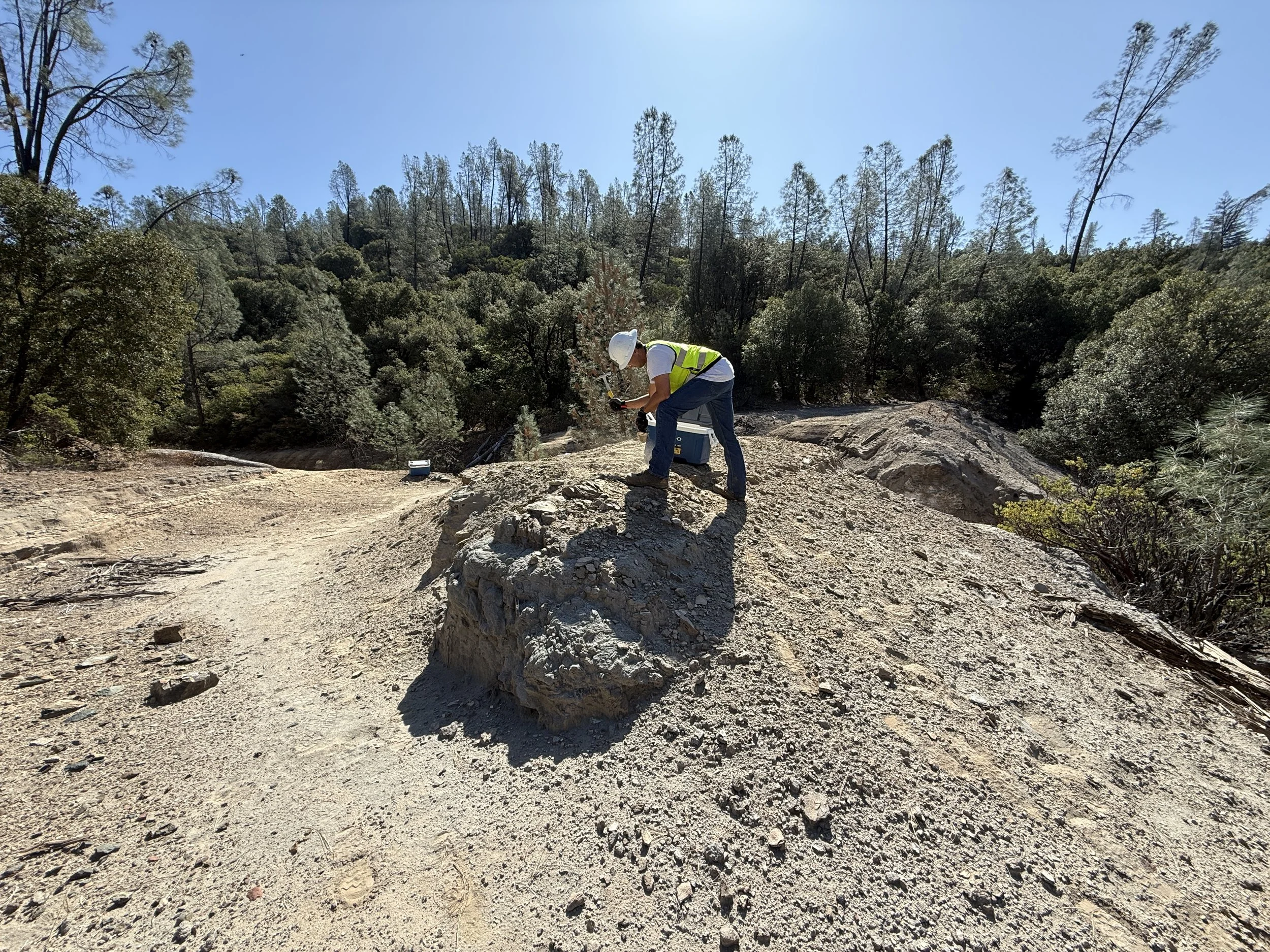
Technologies for recovering copper, zinc, silver, gold, gallium, germanium, and nickel from solid mining and mineral processing waste materials are undergoing initial testing with feedstocks from across the western U.S. Technology assessments include an optimization phase followed by a demonstration phase. The EMRTAI is currently planning bench- and pilot- scale technology assessments for Winter and Spring 2027.
The image shows an EMRTAI scientist collecting tailing and slag samples at Afterthought Mine and Smelter, which produced zinc, copper, lead, and silver from 1862-1952. It was added to the Superfund NPL in September 2024. A technology assessment later this year will recover copper from the tailings.
Recovery of Critical Minerals from Mining Influenced Water
Interested in working with us?
Serve on a technical panel
Reach out to explore opportunities for working with EMRTAI
Technology Assessment Framework

Key elements of the framework:
Rigorous QAQC process to produce credible data
Technology assessments that use real mine waste (mining influenced water, chat, waste rock, tailings, contaminated soils/sediments) as feedstocks.
Consistent performance metrics and operational considerations within categories of technologies to align the data produced with user needs during decision-making
Peer review of technology assessment protocols and reports by Technical Panels to promote scientific rigor, data usability, and alignment with remedial outcomes
Communication of results in diverse formats to support stakeholders in understanding the potential use and implementation of technologies to reduce site contamination and recover valuable products.
EMRTAI funds technology demonstration projects in coordination with technology developers and vendors to support advancement of technologies and generation of credible data.